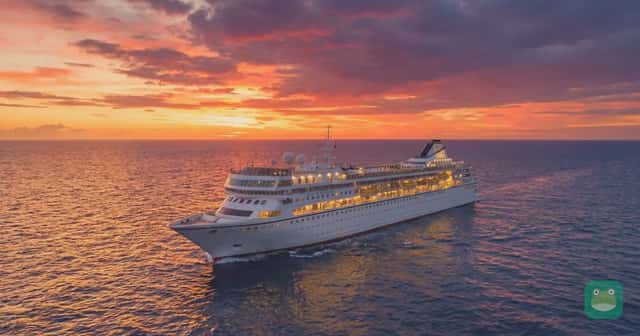
Villa Vie Residences plans to seek Chapter 11 bankruptcy protection, its founder says. The news comes days after the company put its only ship, Villa Vie Odyssey, into layup in Sihanoukville, Cambodia, and sent its residents ashore.
Founder Mikael Petterson told CBS News that the company had run out of money while it looked for a financial partner. "We're at a point where it's just at a breaking point where we need capitalization," he said.
We covered the layup itself on Oct. 27. Here is what has changed since then, and what is still unknown.
The plan now: Chapter 11
Chapter 11 is the part of U.S. bankruptcy law that lets a company keep running while it reorganizes its debts. It is not the same as shutting down for good. A court oversees the process, and creditors get a say in the outcome.
Petterson told CBS News the company plans to file. As of Oct. 30, we could not find a public court filing. In its Oct. 27 press release, Villa Vie said it would "work toward restructuring and recapitalization over the next 60 days." It also said that "no financing or transaction has been finalized" and that "no outcome is assured."
Petterson told NBC News, as quoted by People, that he wants a "recapitalized restructure that saves the ship and its residents in the best way possible."
Why the money ran out
Petterson gave CBS News new detail on the cost squeeze. He said fuel cost about $700 a ton before the war with Iran began in late February. It then rose to $2,000 to $3,000 a ton. The ship burns 700 to 800 tons a month, he said.
He told CBS News that monthly expenses jumped from about $400,000 to $2 million. The company slowed the itinerary and stayed five or six days in each port, hoping the conflict would end. Petterson said it also borrowed money and stretched payroll. It chose not to pass the full cost on to residents.
The company's own figures match that picture. It says monthly fuel cost per cabin used to average about $1,800. In parts of Asia it recently hit an estimated $6,000 to $8,000.
"I think we would have done very well if there had been no war with Iran," Petterson told Business Insider, as reported by Sweden's TT News Agency. He also told the outlet, "I'm the villain in the story, but I'm doing everything I can to support the residents on a solution."
Seven hours to leave
Residents got very little warning. Cruise Hive reported that a notice from company executive Kathy Villalba went up on the ship's internal message board early in the morning. "Unfortunately, we were unable to secure the fuel necessary to continue operations," it said. "All residents must disembark by 2:00 PM today."
Islands reported that the notice was posted at 7:08 a.m. That left residents less than seven hours to pack. Shuttle buses dropped them in central Sihanoukville. Residents could come back under supervision for more belongings until the shuttle stopped the next evening. After that, they had to arrange pickups through Guest Services.
Resident Randy Cassingham, who writes the ResidentialCruising.com blog, described the scene to Islands. "We couldn't even walk out of the port," he said. "They didn't even give us a list of hotels, let alone help us get there or pay for them." He later updated his blog to say the company sent help and a hotel list about 27 hours after residents left the ship.
How many people were onboard
Counts vary. Islands reported 203 passengers and 156 crew onboard as of Oct. 27. CBS News said more than 200 passengers, mostly Americans, were stranded in Cambodia. Crew members are staying on the ship to keep its essential systems running during the layup, according to Cruise Industry News.
What residents paid
Many residents sold their homes to live at sea. Islands reported that permanent residency packages started at $119,999 and five-year packages at $59,999, plus monthly fees. Cruise Fever reported that some residents paid $140,000 to more than $300,000 for their cabins.
There is no word yet on refunds. Villa Vie's statement does not mention them. The company says it is working with residents on temporary places to live.
Earlier warning signs
The Odyssey had a rocky start. It spent about four months in Belfast in 2024 for repairs to its rudders and gearbox before it finally left in early October, The Independent reported.
People reported that the ship scored 81 on a U.S. Centers for Disease Control and Prevention sanitation inspection in July 2025. The CDC treats a score of 85 or lower as not satisfactory.
Cruise Industry News also reported that the company asked residents for $360,000 for fuel shortly before the layup. In April, it had sought $3 million through an "Emergency Loan Investment Opportunity" at 12% to 24% interest. Two possible rescues were in the works. Former Bahamas Paradise Cruise Line CEO Oneil Khosa reportedly toured the ship to look at buying it. A resident-backed group under Sagar Capital LLC floated a plan that included residents buying back their cabins.
About the ship
Villa Vie Odyssey was built in Spain in 1993. It sailed for Fred. Olsen Cruise Lines as Braemar from 2001 until the pandemic. The ship is 24,344 gross tons, with 485 cabins.
Villa Vie bought it in 2023 and started its round-the-world voyage in fall 2024. The plan called for about 3.5 years and more than 425 ports. In July 2026, the company said it had sold more than 85% of the ship's residences and announced a second ship, Legacy, for early 2029.
What it means if you are thinking about a residential cruise
Petterson put it bluntly to Business Insider: "Nobody that's tried residential cruising has succeeded, and we've gone further than anyone else."
If you are weighing a long, prepaid life at sea, ask hard questions first. Who holds your money? Is any of it in escrow? What happens to your cabin if the company fails? Read the contract with a lawyer. Get travel insurance that covers a supplier going out of business. And check the ship's history, including its CDC inspection scores.
For a regular vacation, the big lines are a different case. They have many ships and buy much of their fuel ahead of time. You can compare them on our cruise lines page.
We will keep updating this story as Villa Vie files in court or shares news on refunds.
Sources
- CBS News, Oct. 28, 2026
- Villa Vie Residences press release, Oct. 27, 2026
- Cruise Industry News, Oct. 27, 2026
- Cruise Hive
- Islands, Oct. 29, 2026
- People, Oct. 30, 2026
- TT News Agency via Sweden Herald, Oct. 30, 2026
- The Independent, Oct. 30, 2026
- Maritime Executive, Oct. 27, 2026
- Cruise Fever via Yahoo, Oct. 27, 2026